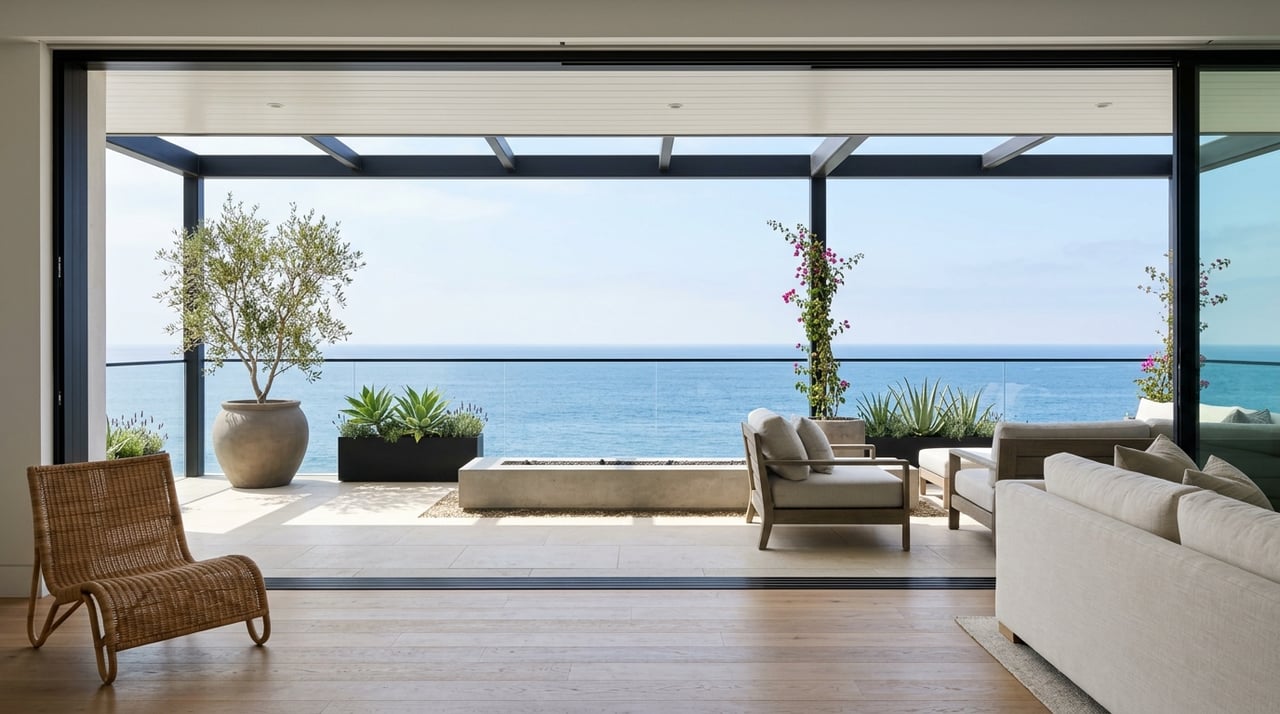
If you are trying to picture daily life in La Jolla, the short answer is this: it feels coastal, established, and highly lived-in. You are not just moving near the beach. You are stepping into a community where ocean access, neighborhood routines, arts institutions, and practical day-to-day logistics all shape how life actually feels. If you want a clearer sense of what living here is really like beyond the postcard views, this guide will walk you through it. Let’s dive in.
La Jolla feels established
La Jolla is a primarily residential coastal community about 12 miles north of Downtown San Diego. According to the City of San Diego, it covers roughly 5,718 acres, has about 32,000 residents, and is 99% built out.
That matters because La Jolla does not feel like a newly developing area with large tracts of new homes. Instead, it feels mature and layered, with neighborhoods shaped by ocean bluffs, beaches, hillsides, canyons, and Mount Soledad. Day to day, that creates a sense of place that feels settled rather than in transition.
The area is also 58% residential, which helps explain why living here feels different from simply visiting for the day. Even with its popularity, La Jolla functions as a real neighborhood with schools, recreation, local services, and long-standing residential routines.
Daily rhythm is shaped by the coast
In La Jolla, outdoor time is often part of ordinary life rather than a special plan. Depending on where you live, your routine may include a morning beach walk, an afternoon stop at a park, or time spent near the shoreline before or after work.
The city maintains permanent lifeguard stations at La Jolla Cove, La Jolla Shores, Children’s Pool, and Black’s Beach. That infrastructure supports regular beach use and makes the coastline feel like a practical part of daily life, not just scenery.
At the same time, coastal living here comes with rules and management. Many shoreline areas prohibit dogs, alcohol, glass containers, smoking, camping, and disturbing noise, and some access points are affected by wildlife protections and seasonal closures.
That means living in La Jolla often involves a mix of beauty and structure. You can enjoy the coast often, but you also learn the rhythms, restrictions, and busy times that come with a heavily used shoreline.
The Village offers the most walkable feel
If you want the version of La Jolla that feels most like a classic seaside town, the Village is usually the clearest example. It is the historic core, centered around Prospect Street, Girard Avenue, and Torrey Pines Road.
This part of La Jolla is closely tied to the area’s earlier history of small summer cottages and coastal homes. Today, it remains one of the most shop- and dining-oriented pockets of the community, which gives daily life here a more walkable, errand-friendly feel than many hillside or residential sections.
If you live in or near the Village, everyday routines can feel compact. You may be able to combine coffee, dinner, a quick errand, and a coastal walk into one outing, which is a big part of the lifestyle draw.
La Jolla Shores feels beach-centered
La Jolla Shores has one of the most relaxed and beach-focused daily rhythms in the community. The beach stretches about a mile, and the City of San Diego notes that summer waves here are usually among the gentlest of any San Diego beach.
That helps explain why the Shores is often associated with easy beach access and everyday outdoor use. Novice scuba classes are common, and the area has a permanent lifeguard station, which adds to the sense that the beach is a regular activity zone rather than only a scenic backdrop.
Kellogg Park adds another practical layer. It includes a large grassy park, playground, and the only beachfront boat launch within San Diego city limits, so daily life near the Shores often feels active, open-air, and centered on simple recreation.
Bird Rock and Windansea feel more local
Bird Rock tends to read as more residential and neighborhood-based than visitor-driven. It is part of greater La Jolla, but it has a more local surf-and-street routine that can feel distinct from the Village or Cove area.
Calumet Park sits in Bird Rock overlooking the Rock Pile surf break, reinforcing that strong connection to outdoor living and local coastal access. This part of La Jolla often appeals to people who want a neighborhood setting with ocean presence woven into daily life.
Windansea has an even more surf-forward identity. The city describes a rocky shore, underwater reef breaks, moderate to severe shore break, and a more secluded feeling created by sandstone rock partitions, so day to day it feels scenic and dramatic but also less casual for everyday swimming than the Shores.
Cove living is scenic and busy
La Jolla Cove is one of the most visually striking parts of the community, but it is also one of the most visitor-oriented. The city describes it as a very small beach between sandstone cliffs, popular for swimming, snorkeling, and scuba diving, with visibility that can sometimes exceed 30 feet.
For residents, that means you have access to one of the area’s most memorable coastal settings, but you are also living near one of its busiest scenic destinations. If you love being close to iconic views and ocean activity, that can be a major plus.
Nearby areas come with added wildlife management. Children’s Pool is known for harbor seal viewing and seasonal closure during pupping season, and Point La Jolla has had restrictions tied to sea lion activity, so this stretch of coastline is beautiful, active, and carefully managed.
Hillsides and north edge feel quieter
The hillier and northern sections of La Jolla often feel more removed from the busiest shoreline pockets. Because the community rises toward Mount Soledad and reaches toward the Torrey Pines edge, some areas offer a daily routine shaped more by views, elevation, and trail access.
Torrey Pines State Natural Reserve adds a strong nature component nearby. California State Parks describes it as a wilderness island in an urban sea, with hiking trails, a visitor center, rare Torrey pines, and one of Southern California’s last salt marshes and waterfowl refuges.
If you picture daily life with more time on trails and scenic drives than quick beach stops, these areas may feel especially appealing. They still connect to the larger La Jolla lifestyle, but the mood is often quieter and more nature-oriented.
Arts and science are part of everyday life
One thing that makes La Jolla stand out is how much arts and science are woven into the neighborhood. This is not just a beach community. It also has cultural institutions that shape everyday living.
The Museum of Contemporary Art San Diego has a La Jolla campus on Prospect Street focused on contemporary art. Birch Aquarium serves as the public exploration center for Scripps Institution of Oceanography, and La Jolla Playhouse has a long record of world premieres and productions that have moved on to Broadway.
For residents, this means a casual weekend or weeknight can include more than the beach. You have meaningful access to exhibits, performances, and science-centered programming without leaving the community.
Family routines have strong local support
La Jolla supports everyday family logistics in ways that are easy to overlook if you only know it as a destination. The city lists public schools including La Jolla High, Muirlands Middle, Bird Rock Elementary, La Jolla Elementary, and Torrey Pines Elementary, along with several private and independent schools.
The La Jolla Recreation Center adds another practical layer with classes, playgrounds, courts, a weight room, meeting space, and an auditorium. That kind of infrastructure matters because it supports the routines that turn a coastal area into a functioning full-time community.
If you are moving with children, or simply want a neighborhood that feels active beyond tourism, this part of La Jolla is important. It has the daily framework of a residential community, not only the appearance of one.
Getting around still takes planning
La Jolla is not transit-isolated, but most of it remains car-oriented. Main access routes include I-5, La Jolla Village Drive, La Jolla Parkway, and Torrey Pines Road, and those corridors shape how residents move in and out of the area.
Public transit is available in meaningful pockets. MTS Route 30 connects Old Town, Pacific Beach, La Jolla, UTC, and UC San Diego, while Route 101 and SuperLoop Rapid 201/202 help connect the UTC and UC San Diego areas. The UC San Diego Health La Jolla station on the Blue Line also improves access along the eastern edge.
In practical terms, this means shoreline areas are usually more lifestyle-driven and more car-reliant. Areas closer to UCSD, La Jolla Village Drive, and UTC tend to offer easier transit access for commuting.
Parking and seasonal crowds are real
One of the most honest things to know about living in La Jolla is that convenience can shift by season and location. Summer parking complaints are common at Torrey Pines, and Kellogg Park’s lot fills quickly on summer weekends.
That does not mean daily life is unmanageable. It simply means residents often learn to time outings strategically, especially near the most popular beaches and coastal attractions.
This is part of what makes La Jolla feel both residential and visitor-adjacent. You can absolutely build a wonderful routine here, but it helps to understand that some of the area’s most beautiful assets are also shared with a broader public.
Housing feels layered, not brand new
Because La Jolla is 99% built out, the housing stock is shaped more by preservation, remodeling, and infill than by large new subdivisions. The city notes that La Jolla was once known for small single-family summer cottages, and some rare early beach cottages still remain.
That history gives the housing landscape a more layered feel. Depending on where you look, you may find older coastal homes, historic remnants, updated properties, or replacement homes on established lots.
For buyers, that often means home shopping in La Jolla is less about choosing among uniform new inventory and more about understanding micro-location, condition, views, access, and long-term fit. It is a highly specific market, and those details matter.
What living in La Jolla really feels like
Day to day, La Jolla feels like a blend of beauty, routine, and nuance. You get the coastline, the scenery, and the outdoor lifestyle people imagine, but you also get hills, traffic patterns, managed shoreline access, established housing, and neighborhood differences that can change the experience a lot from one pocket to another.
That is why La Jolla tends to appeal most to people who want a strong sense of place. If you value an established coastal setting with residential depth, cultural institutions, and several distinct lifestyle pockets, it offers something more layered than a simple beach-town label.
If you are thinking about buying or selling in La Jolla, the best next step is to look closely at how each micro-area supports your routine, priorities, and long-term goals. For tailored guidance on La Jolla and other coastal San Diego neighborhoods, connect with Ingrid Pasco.
FAQs
What is daily life in La Jolla like for full-time residents?
- Daily life in La Jolla usually combines coastal access, neighborhood routines, local recreation, and a mix of residential calm with visitor activity in the busiest shoreline areas.
Which part of La Jolla feels most walkable day to day?
- The Village generally offers the most walkable-feeling daily experience because it is the historic core with a concentrated mix of shops, dining, and coastal access.
What is the lifestyle in La Jolla Shores like?
- La Jolla Shores feels especially beach-centered, with a one-mile beach, gentler summer waves, a lifeguard station, and Kellogg Park supporting regular outdoor use.
How does Bird Rock living feel compared with La Jolla Cove?
- Bird Rock tends to feel more residential and local, while the Cove feels more scenic and visitor-oriented with heavier tourism and more managed shoreline access.
Is La Jolla practical for commuting?
- La Jolla is largely car-oriented, but areas closer to UCSD, La Jolla Village Drive, and UTC have better access to bus routes and the Blue Line station.
What should buyers know about homes in La Jolla?
- Homes in La Jolla are typically part of an established, built-out community, so buyers often evaluate older housing stock, remodeled properties, infill projects, and highly location-specific lifestyle differences.